About
The Journey of Heroes and Spells: How Our Game Began
Jun
Heroes and Spells
The Journey of Heroes and Spells
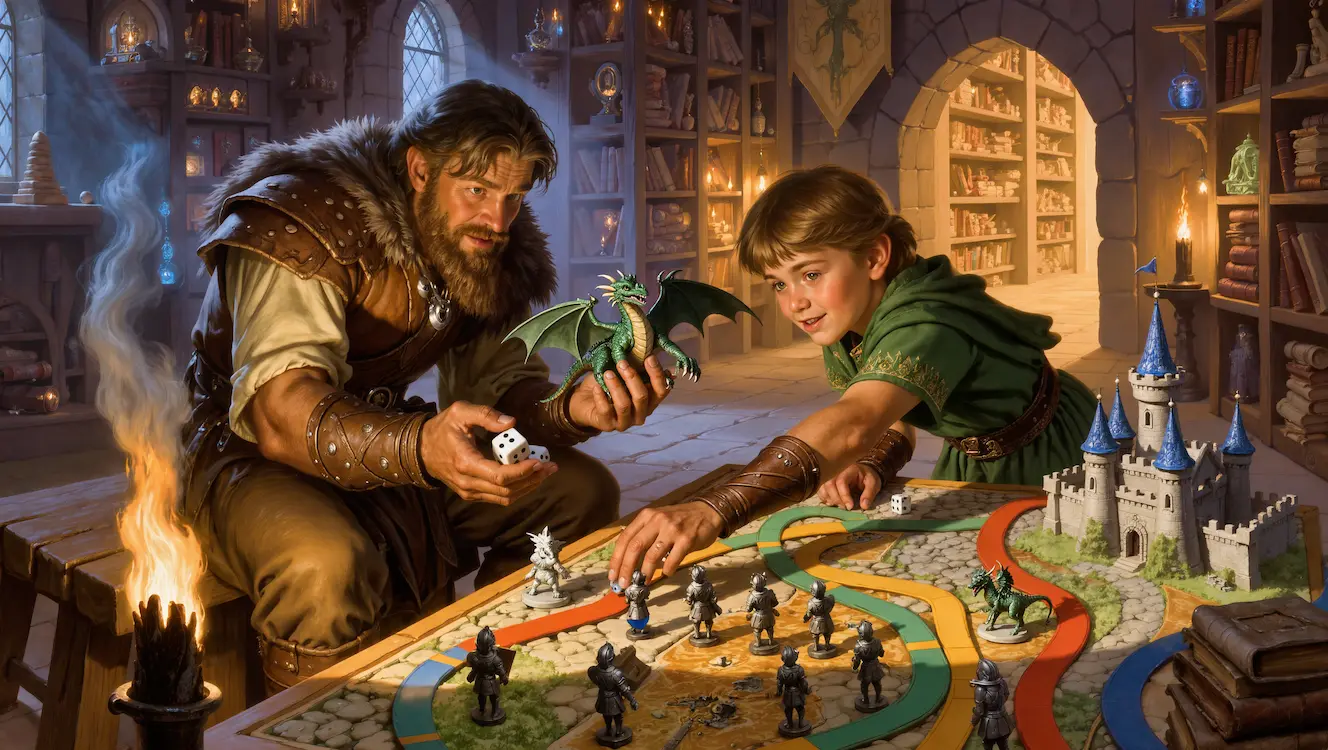
How a father and son passion project grew from a 3D printer, printed tokens, rough play test cards, and a simple idea into a fantasy tabletop game.
Back in January 2024, Heroes and Spells began in a very simple way: with a birthday present, a new 3D printer, and a lot of curiosity.
For David’s birthday, he received a Bambu Lab A1 Mini 3D printer. Like many people who get their first 3D printer, the early days were all about experimenting, learning, printing models, testing ideas, and seeing what was possible. After making several different models and creating some custom tokens for Magic: The Gathering, David and Fredrick started talking about something bigger.
What if we made our own game?
That simple conversation became the starting point for Heroes and Spells.
From Printed Pieces to a Playable Game
At first, the game was very basic. David and Fredrick started by downloading and printing generic figures and game pieces, then printed out simple cards with rough ideas on them. These early cards were not polished, but they allowed us to test the core idea of the game.
The first version was simple, rough, and full of trial and error, but most importantly, it was fun.
That early fun gave us the motivation to keep going. Over the next two years, with the help of friends and family, including Amanda, we continued to play test and refine the game. We changed rules, adjusted cards, tested different ideas, removed things that did not work, and kept improving the parts that made the game enjoyable.
Slowly, the core of Heroes and Spells began to take shape.
Creating the First Play Test Deck
Once the basic structure of the game was working, we decided to take the next step and have a play test deck printed professionally by a Magic token card printer. This made a huge difference. Holding proper cards in our hands helped the game feel more real and gave us a better way to test how everything played together.
At this stage, we also began using Kling AI to help create card artwork.
We understand that AI artwork can be frowned upon in parts of the trading card game community. For us, Heroes and Spells has always been a passion project, created by a father and son team with the support of friends and family. Using AI tools gave us the ability to create cards with a Sword and Sorcery style that matched the feeling we wanted for the game, without needing the budget of a large game studio.
The artwork helped bring the world of Heroes and Spells to life.
After more testing, we printed a second deck with minor fixes and improvements that came from continued play testing. Each version helped us refine the cards, the flow of the game, and the overall experience.
From Core Set to Expansion Ideas
As the core cards were developed, we found ourselves with a growing collection of extra card ideas. Some of these cards were more powerful, more complex, or simply did not fit the beginner stage of the game.
Rather than discard them, we realised they had a place in the future of Heroes and Spells.
This led us to the idea of creating an expansion. The expansion would allow us to use some of the stronger cards and the ideas that did not quite belong in the core set. It also meant players could change the game experience, try different card combinations, and enjoy more variety each time they played.
By this point, we were excited. Heroes and Spells had reached a stage where it was fun, playable, and something we were genuinely proud of.
Building Our Own Miniatures and Game Pieces
The next major step was creating our own 3D printed game pieces and miniatures.
Our CAD skills were basic, so at first, we used Fiverr to have some miniatures created. While this was okay, we soon realised we were paying a premium for models that were not quite what we wanted.
For the second round, we created artwork in Kling to show how we wanted the miniatures to look, then supplied those images to a Fiverr creator. The STL files we received were better and the process felt like a step in the right direction, but we still were not fully happy with the final results.
That was when we started using ChatGPT and Kling together to refine the images for the miniatures. This was a big leap forward. By this stage, we had printed many different figures and had a much clearer idea of what worked well as a 3D print and what style we wanted for Heroes and Spells.
Once we had a stronger set of images, the next challenge was turning them into STL files.
Then we discovered Meshy, an AI tool for creating 3D models.
We gave it a go, and we were amazed.
The first results were not perfect, but with some effort, adjustments, and continued refinement, we finally began creating miniatures that matched the style and feel we had been looking for. It was a major turning point for the project.
A New Printer and Better Prints
As the miniatures improved, we also upgraded our printer to the Anycubic Kobra X. This allowed us to print our miniatures with PETG supports, making support removal easier and helping protect the details of the models.
This was another big step forward for the project. The print quality, the size, and the ability to work with support materials made a real difference.
We love this printer, and it has become an important part of bringing Heroes and Spells to life.
Ready for More Play Testing
With the cards refined, the miniatures improved, and the game pieces coming together, we printed a full set of the game and created another updated deck with a few more tweaks.
At this stage, Heroes and Spells was ready for other people to play test.
We are now making everything we have created available on our website, and we hope anyone who is interested will give it a go. This game has grown from a simple idea at home into something much bigger, and we are excited to share it.
A Father and Son Adventure
Heroes and Spells has been a journey of learning, experimenting, printing, testing, failing, improving, and trying again.
For David and Fredrick, it has also been something even more special: a father and son adventure.
We have enjoyed building this game together, and with the support of friends and family, we are proud of what we have created. It has been a project filled with creativity, problem solving, and a lot of fun.
We would like to thank and acknowledge the programs and tools that helped us get this far, including ChatGPT, Kling AI, Meshy, Bambu Lab, Anycubic, and the many creative tools that made this project possible.
We would also like to thank Amanda Cook, Baily, Amelia, Priscilla, and many others who helped, supported, tested, encouraged, and contributed along the way.
Heroes and Spells started with a 3D printer and a simple idea.
Now, it is a game we are proud to share.
Congratulations David and Ricky. What a great achievement. It sounds like something my Grandson Ricky would be interested in. I will pass it on to him. All the best.
Thanks Diane, we are very happy with how this came out.